An Airbnb cleaning and linen service covers two jobs. The clean is one. The linens are the other. Most hosts assume the cleaner handles linens. Many cleaning companies assume the host has sorted this out. Neither side checks. The gap between those two assumptions shows up at the worst possible time: a freshly cleaned unit, a bare mattress, check-in an hour away, and two parties who each thought the other one had the linens covered from the start.
The linen question is not complicated. It needs a real answer before the first visit. Not after. This guide covers who supplies the linens, how many sets each bed needs, what laundry fits inside a tight window, and the questions worth asking any company before you hand over the code and the first guest walks in.
What “linen service” actually means
The phrase means different things to different companies. For some, linen service means the company owns a stock of linens, delivers fresh sets, and collects the used ones after each stay, and for others it means the crew washes and remakes the host's own linens as part of the turnover scope. For others still, it means nothing at all. The crew cleans. The linen question belongs to the host.
Ask which model the company assumes
Before the first booking, ask directly. Does the company bring its own linens or work with the host's? Does laundry fall inside the cleaning fee or get invoiced separately? Who decides when a sheet is too worn to reuse? These are not difficult questions. A company with a real turnover system answers them without hesitation. The same questions came up with the last host and the one before that, and a company that has never been asked them has not been doing turnover work long enough to trust on a busy calendar.
The case for host-owned linens
Most working Airbnb hosts own their own linen sets. The reasons are practical. You control the quality. You control the look that matches the listing photos. You are not dependent on a company's stock when a booking lands at short notice, and when a set gets stained, you decide what replaces it and when, without waiting for someone else's inventory to catch up with your calendar.
What host-owned linens need from the company
When the host owns the linens, the company's job is to wash, dry, fold, and remake to the host's standard. That sounds simple. It is not. The execution requires the right number of sets on site and a folding standard the crew follows every visit, so ask how the company learns your staging preference. A good answer involves a written guide or photo reference. Not a verbal description given on the first day.
The case for company-supplied linens
Some hosts prefer not to own or manage linen inventory at all. The company brings the sets. It takes the used ones away. The host never thinks about laundry. That removes one logistics problem and creates another. You depend on the company's stock, its delivery timing, and its quality decisions, which means that when a set goes thin, or a delivery misses the window, or the company's standard slips, the problem lands in your listing reviews before it reaches your inbox.
Questions that expose the gaps
Ask what happens when a same-day booking shortens the window. Ask what the company does when a set comes back damaged. Ask who absorbs the cost of a guest-caused stain. Ask how often the sets are replaced. These are not theoretical. Every host with a busy calendar has met at least one of them, and the company that cannot answer clearly has almost certainly not been running turnover accounts long enough to have systems for the situations a busy season reliably produces.
How many linen sets a busy calendar needs
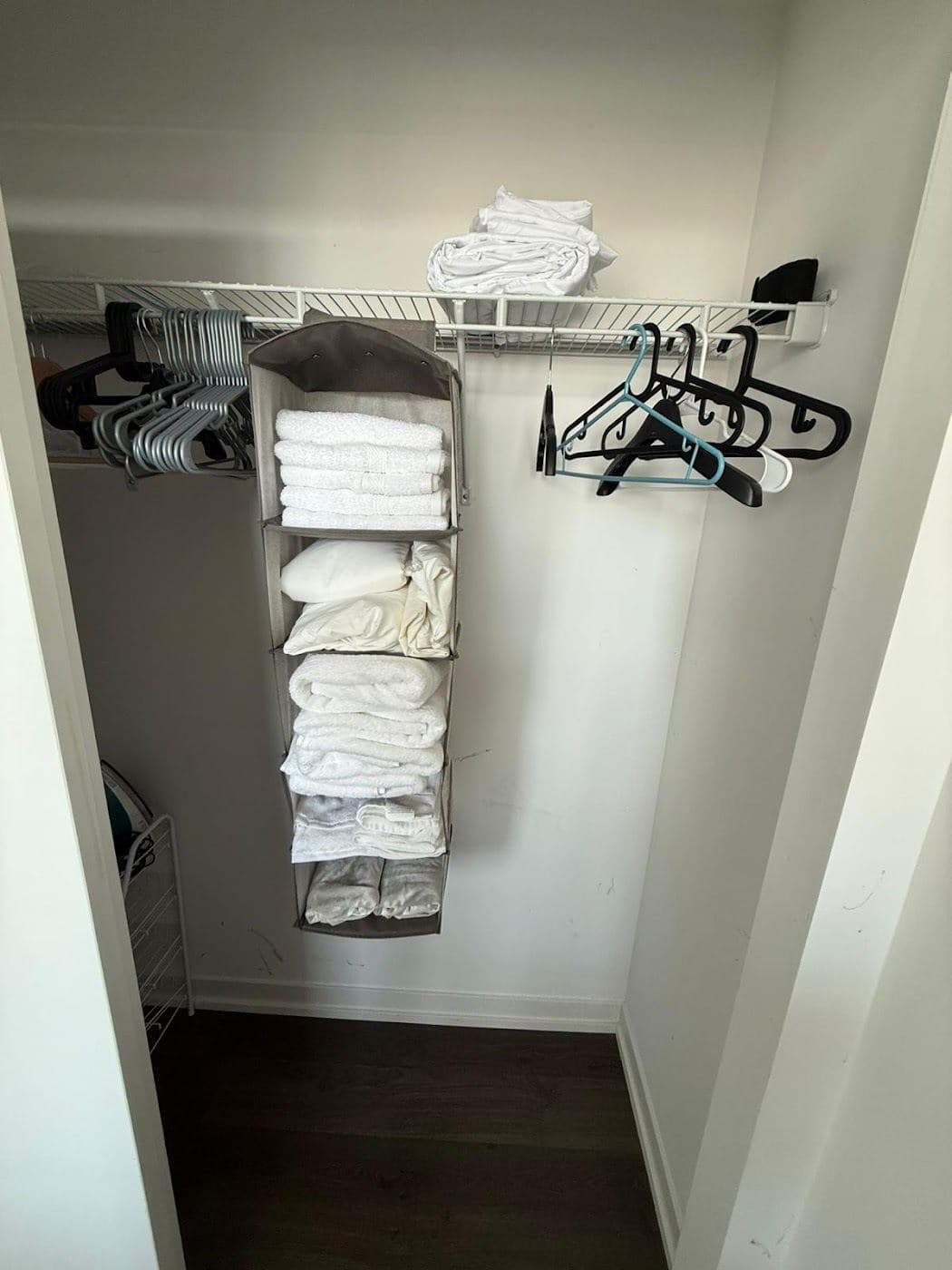
The math is simple. One set on the bed. One clean set in reserve. That gets you through a standard turnover. The used set goes in the wash. The clean set goes on the bed. The next guest does not wait for the dryer. A third set adds a margin when a guest leaves something behind, or when the crew finds a stain the previous guest did not mention, or when the washer picks the busiest weekend of the summer to stop draining.
Count by bed, not by unit
A two-bedroom listing needs those multiples per bedroom. The king in the primary and the queen in the second each need their own sets. Pillow counts matter too. Four pillows on a king means four pillowcases per set, and a short-supply moment on pillowcases is exactly as visible to a guest as a short-supply moment on sheets.
Towels follow the same rule
One in use, one in reserve. That is the standard for bath towels, hand towels, and bath mats as much as for bed linen, so ask the company how it counts a towel set, because the answer tells you how much storage the unit needs and what a full restocking looks like.
Why a tight turnover window and on-site laundry often disagree
A standard wash cycle runs about forty-five minutes, a dryer cycle adds another forty-five to sixty, more with thick cotton, and a four-hour turnover window can absorb that if the crew starts the machine immediately and the unit is otherwise straightforward. Late checkouts cannot. Back-to-back bookings cannot. A second bedroom makes the arithmetic harder still.
The staging solution most experienced hosts land on
Keep enough clean sets to remake every bed from the shelf. The used linens go in the wash after the unit is ready. The machine runs on its own schedule. The guest arrives to a freshly made bed. This is not a workaround. It is the standard model for any host with more than two bookings a week, and the hosts who discover it late are usually the ones who spent a summer arguing with a dryer about whether check-in could wait an extra forty minutes.
Off-site laundry: when it makes sense
Some cleaning companies offer off-site laundry pickup and delivery. The company collects the used linens after each turnover, launders them at a commercial facility, and returns them folded before the next visit, so the timing has to fit your booking pattern. Overnight stays with a morning check-in give far less lead time than a two-night gap.
What to confirm before agreeing
Ask about turnaround time. Ask what happens when a booking shortens the window. Ask who holds the set if delivery is delayed. Ask about replacement when a set comes back damaged. The company running a real off-site service has answered all of those questions. The first busy weekend produced every one.
Restocking: the linen question's close cousin
Linen handling and restocking are separate jobs. A crew that remakes the bed correctly and leaves the bathroom soap untouched has done one job, not both. Toiletries, paper products, and welcome amenities each need their own restocking plan.
How a working restocking agreement looks
Agree on what gets restocked. Agree on where backup stock lives. Agree on the par level for each consumable. Then agree on how a low supply gets reported. A crew that finds the last roll of toilet paper during a turnover should tell you before the next check-in. Not after the guest reviews. A guest who runs out of toilet paper on a Saturday night does not write a note to the host first, so a photo from the supply shelf while the team is still on site is the right standard. A note left on the counter is not.
Building a linen plan before the first booking
The right time to settle the linen question is before the unit goes live. Not after the first complaint. Walk through the bedroom count, bed sizes, towel inventory, and booking pattern with the cleaning company before the first turnover, then ask what a standard linen check looks like at the end of a visit and what gets flagged when a set is ready to retire. The answers tell you more about the company's actual turnover experience than anything on its website.
The Airbnb turnover cleaning page covers the full scope of what a turnover visit includes beyond linens. And if you are still weighing companies, the guide to choosing an Airbnb cleaning company covers the broader interview: windows, backup coverage, checklists, damage reporting, and building access, and all of those connect to the linen plan in ways that only show up once the calendar fills.