Decide what best has to mean for your home
Best is not a universal badge. A dependable recurring cleaner and a detailed one-time reset are different jobs, an organizing project is a third, and the skills and the scope behind each of them barely overlap. So start with the result you need, because the provider who suits one of those jobs can be a poor match for the next one.
Four questions that separate providers
Then ask four questions. What is included. Who supplies the products. How long the visit is expected to take. And what happens when the real condition of the home turns out to differ from the quote request, because those four answers separate providers far more reliably than any ranking does.
What top rated actually indicates, and where it stops
A strong average rating is real evidence of something: it usually means a provider has delivered acceptable work repeatedly, over a long stretch, without collapsing under complaints. That is worth knowing. What it does not tell you is which service was booked, what condition the home was in, how much time was allowed, or how the company behaved on the day something went wrong.
Similar scores, very different operations
Search results also flatten differences. Two companies with similar scores can run completely different operations, and a rating earned on recurring condo visits, where the same two bathrooms and one galley kitchen come round every fortnight, tells you very little about a first deep clean in a multi-level house. Move-related work brings different access and timing pressure again. Treat the label as a reason to look closer. Not as the answer.
What review volume and age add
Review volume and age give useful context. A handful of recent comments says one thing. A long history with a two-year silence in the middle says another, a steady flow across several years says something different again, and each of those patterns changes how much weight the score can carry.
How to read Toronto cleaner reviews critically
Read for patterns across several months. The top few comments are the least useful thing on the page. One emotional review carries less weight than a repeated theme. Positive or negative, it is one visit. Watch instead for the same scope, timing, or communication problem surfacing across different months, and look hardest at reviews that name which service was booked, what condition the home started in, and what style of property it was, because those are the only ones describing a visit that resembles yours.
Comments that describe how problems were handled
Detail beats enthusiasm. A comment describing how the team handled a missed task, an access problem at the side door, or a change in scope is worth more than a paragraph saying the result was great. Notice whether reviewers can tell routine cleaning apart from optional detail work, because when they cannot, the provider may not have made that boundary clear in the first place.
Watch how the company answers criticism
Read the replies, not only the stars. Responses to complaints often reveal more than the complaints do, and a calm, specific reply that explains what happened and names the next step is a good sign. A reply that dismisses the concern, or one that airs a client's address to win the argument, tells you exactly how your own feedback would be handled, and a page of generic praise with no replies at all gives you very little to work with.
How residential, recurring, and one-time providers differ
Cleaning company vs individual cleaner is mostly a coverage question. A company can send someone else when a cleaner is sick. An individual cannot. Most searches for a Toronto house cleaner point at one of three jobs, and the first is recurring upkeep: an agreed checklist repeating on a weekly, bi-weekly, or monthly rhythm. The second is a one-time visit tied to an event. A move. A seasonal reset. Guests on Friday. Or a home that has gone a long stretch without detailed cleaning. The third is organizing paired with cleaning, where belongings have to be sorted off the dining table before the dining table can be wiped at all.
Where residential work stops
Residential cleaning means work in occupied homes, not offices or construction sites, and it is where most providers concentrate. Narrower scopes sit beyond it. Move and post-construction work answer to debris and handover conditions that a maintenance visit was never built for, specialty surfaces may need separate equipment or a different trade entirely, and a well-reviewed maintenance cleaner is not automatically the right choice for drywall dust or a long-delayed move-out.
Which service each goal points to
Name the goal before you shortlist. A maintenance goal points toward house cleaning or a recurring plan. A reset goal points toward deep cleaning. And when the real obstacle is storage and not soil, when the problem is that nothing in the room has a place to go back to, the goal is a decision goal and it points toward professional organizing.
When organizing has to come before cleaning
The order matters. Start with cleaning when surfaces are accessible and what has fallen behind is dust, floors, kitchens, bathrooms, or detail work, but organizing comes first when belongings block the rooms that need cleaning. A stack of mail moved from the counter to the dining chair during a cleaning visit is not organizing, and buying extra cleaning time to solve a storage problem usually produces exactly the same counter a month later.
Questions an organizing scope has to answer
An organizing scope needs its own questions. Who makes the keep, donate, sell, and discard decisions? Are storage products purchased, and by whom? Who handles disposal, and who drives the donation bags to the drop-off? How much lifting is involved? And will the newly exposed shelves and floors be cleaned as part of the project, or booked separately? Those answers set the time the work needs. They also set how much of your day it eats.
Start where the friction is worst
Sequence the work room by room. Start where the blocked counters, floors, or closets cause the most friction on an ordinary weekday morning, because once those decisions are made, the cleaning tasks for the newly exposed surfaces can be defined properly instead of guessed at.
What to verify before you book
Confirm service area, current insurance, access arrangements, supplies, team size, expected timing, cancellation terms, and the process for reporting concerns, then ask for the room and task list in writing. A provider who can put all of that in one message is far easier to hold to the agreement than one who describes the visit only over the phone.
Check the basics match across their materials
Check that the basics line up across the company's own materials, because business name, contact details, and stated service area should match on the website, on the quote, and on the booking confirmation. A mismatch is not proof of a problem. But it is a reasonable prompt to ask who you are actually dealing with, before you hand over an address or a lockbox code.
Where two quotes stop being comparable
Compare like with like. A quote that leaves out supplies, appliance interiors, stairs, or baseboards is not the same quote as one that includes them, whatever the two totals happen to say.
Questions that expose scope differences between quotes
Most quote differences are scope differences wearing a price tag. So ask each provider directly whether the following sit inside the quoted visit or get handled separately: appliance interiors, inside cabinets, baseboards, interior windows, wall washing, stairs, balconies, high access, laundry, heavy buildup, organizing, and move-related tasks. Labels are unreliable. Standard, premium, and deep mean different things at different companies, and the named task list is the only comparison that holds.
What happens when the visit runs long
Then ask what happens when the work runs long. A useful process pauses and asks for a decision. It does not quietly drop the priority rooms or add an unapproved task, so agree on who can authorise extra time or a substitution, and agree on what the team should do if that person cannot be reached at eleven on a Tuesday morning.
First visits, frequency, and the total
Ask whether the first visit differs from later maintenance visits, ask how a change of frequency changes the scope, and do not assume a recurring arrangement reduces the total unless the quote says so. The lowest number is not automatically poor work, the highest is not automatically thorough work, and the question that matters is whether the hours and the tasks plausibly match the home you are standing in. For a fuller breakdown of what moves a quote, read the guide to house cleaning costs in Toronto.
Raise surfaces, products, and sensitivities before the scope is final
Identify natural stone, unsealed wood, specialty flooring, delicate fixtures, older finishes, and anything carrying manufacturer care instructions, then share allergies, sensitivities, children, pets, and any product that must be used or avoided. Then ask two things. How does the provider confirm surface compatibility? And what does it do when a material cannot be identified with confidence?
When a stronger product is the wrong answer
Do not assume a stronger product or harder scrubbing is the answer to stubborn residue, because some marks are wear and not removable soil, and a ring etched into a stone counter is the usual example. Others need a different specialist altogether, so agree on a cautious approach and name the areas that should be skipped whenever the information needed to clean them safely is not available.
Record the condition before anyone starts
Keep manufacturer instructions to hand. Point out previous repairs, coatings, and existing damage, because that context separates a cleaning request from restoration work and gives both sides a shared record of the condition before anyone starts.
Turn your household needs into a useful shortlist
Before you contact anyone, write something down. Which parts of the service would make the biggest difference to your week? Maybe that is the kitchen and the two bathrooms, kept reliably. Maybe it is one full reset of the whole home. Maybe it is careful work around a nervous dog, or a plan for a condo with detailed access rules about the loading dock, and a shortlist built from those needs beats a list built from whichever names appear first in search results.
Separate the essentials from the preferences
Decide which requirements are essential and which are preferences, because if a specific date, product restriction, or entry method is essential, you want to say so before you ask for a quote. Flexible on timing but immovable about one particular room? Say that too. Clear priorities let a provider tell you quickly whether its house cleaning service is a practical match.
Use the same brief for every company
Send every provider the same brief. Home type, approximate size, bathroom count, number of levels, current condition, priority list, pets, access details, and preferred timing. Say when the home last had a thorough clean. Note any unusual buildup or project residue. Photos can clarify a complicated layout, though they do not replace a written checklist. Consistent information makes the differences between responses far easier to read, while a company that comes back with thoughtful follow-up questions is telling you something useful about how it approaches scope.
Plan for the type of Toronto home you have
Condos and apartments
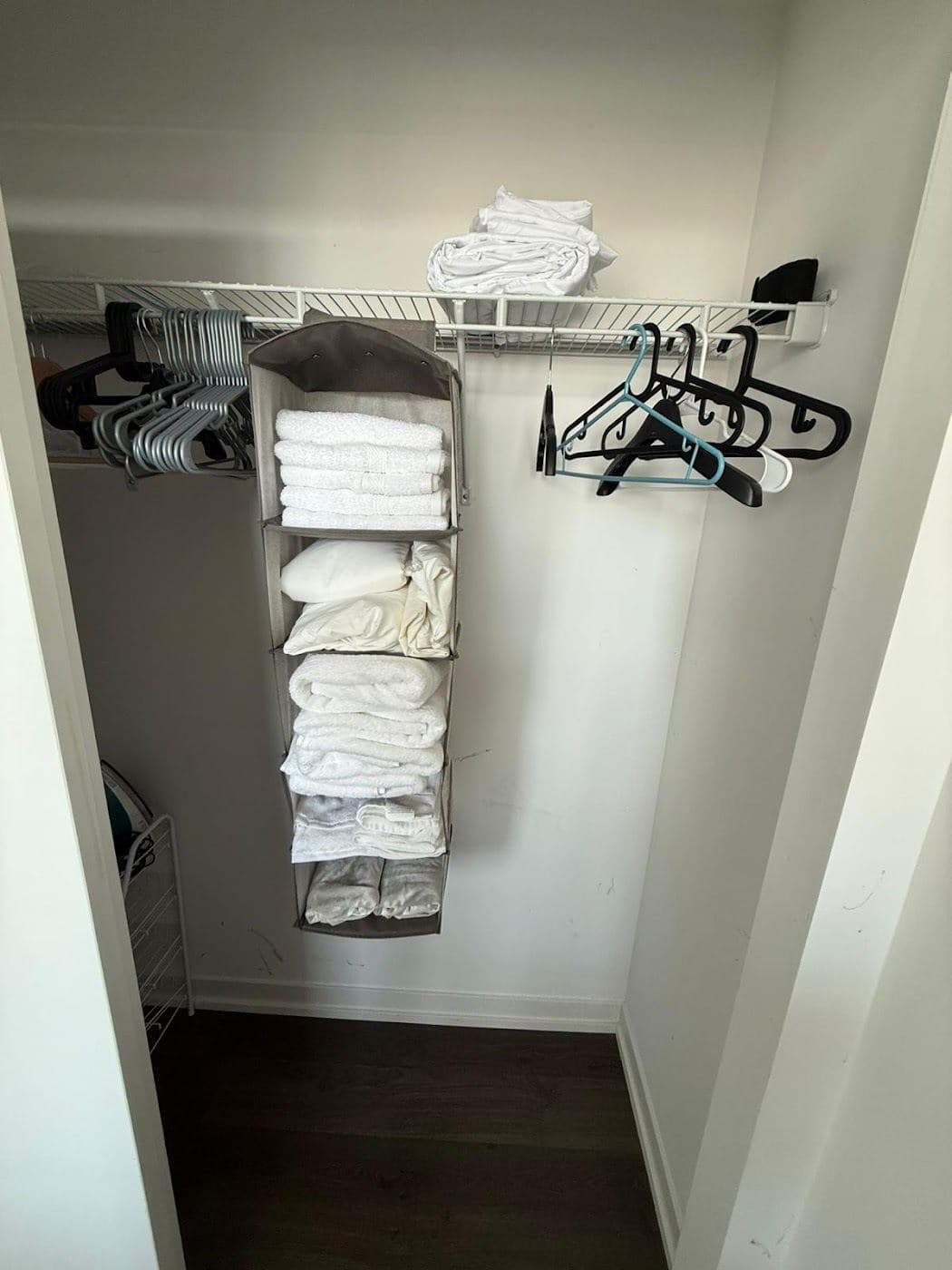
Confirm visitor parking, concierge check-in, elevator booking rules, loading areas, waste room access, and any narrow window the building allows for service visits. Inside the unit, compact storage often decides whether shelves and floors can be reached at all, and whether the hall closet opens far enough to clean the floor behind it is a scheduling question, not a detail. When the space is accessible and the need is routine, the apartment cleaning page is a sensible next step.
Houses and multi-level homes
Divide the home into practical zones. Every square foot does not get equal treatment. Main living areas, bathrooms, bedrooms, finished basements, and low- use rooms can carry very different priorities, so mention stairs, multiple entrances, pet zones, and street or driveway parking when you ask for the quote, because travel through a house eats time in a way the room count never shows.
Evaluate communication before anyone enters the home
The quote process is a preview of the working relationship. Watch three things. Are the answers direct? Are exclusions explained? Does the provider confirm important details instead of assuming them? Fast replies are convenient. But clarity matters more than speed when the request involves access to your home, and a provider that answers quickly without answering precisely has already told you something.
Agree who to contact when plans change
Ask who to contact if an entry code changes, a room becomes off-limits, or the household needs to reschedule, and confirm how feedback should be shared after a visit. Confirm what information helps if something was missed, because a workable communication path supports the household and the cleaner alike and lets a concern be described while the details are still fresh instead of a fortnight later.
Discuss access and privacy directly
Explain how the team will enter, and say where keys are kept, whether anyone will be home, and which rooms hold sensitive work or personal materials. Confirm who receives building codes, lockbox details, and alarm information, and confirm how those details are stored once the visit is over, because an entry code sitting in three people's text messages is not an access plan. Put confidential documents and medication away yourself. Small valuables too. No cleaner should have to decide how to handle them. Clear boundaries are a normal part of preparing for professional service.
What to agree if nobody will be home
If nobody will be home, agree the end-of-visit process in advance. Doors locked. Alarms reset. Keys returned or replaced. And a route for reporting an issue. Put entry instructions, parking notes, pet arrangements, priority rooms, off-limit spaces, and a contact number in one message, so that whoever meets the cleaner at the door has exactly the information you do, then remove temporary access and update building contacts when the arrangement ends or the household changes.
Ask how the company carries information between visits
The person doing the visit matters. So does the system around them. Ask how the agreed checklist, access notes, delicate surfaces, product preferences, and previous feedback are recorded, and ask how that record reaches whoever attends next, because staff changes are normal in this industry and what varies is whether the details travel with the booking or have to be explained from scratch every time.
What consistency you can actually verify
Treat consistency as something you can check. Not something you are promised. A repeatable checklist, visit notes you can refer to, and a named contact for schedule changes are all observable, while an assurance that the same person will always attend is harder to verify and much easier to break.
Match the cleaner to the condition of the home
A home under regular upkeep needs a different plan from one carrying accumulated grease, hard-water marks on the shower glass, dust along the picture rail, or rooms that have not been accessible. Describe the starting point honestly, and resist the urge to pre- clean before the estimate, because a provider cannot recommend the right visit when the request dresses a reset up as light maintenance.
Pick the service for the condition, not the label
When buildup is the central issue, compare the proposed checklist with a dedicated deep cleaning service. When the home already sits at a workable baseline, ask how a recurring cleaning plan would protect the rooms that collect soil fastest. Usually the entry and the kitchen. The best fit is the service designed for the condition in front of you. Not the service with the most ambitious label.
Plan the first visit as a practical trial
The first visit teaches both sides something. The cleaner sees the layout and the real condition. The household sees how a written scope turns into completed work. Choose a few priority outcomes you can review afterwards. Shower glass. Kitchen counters. Floor care. The dusty shelf you keep noticing. Then make the agreed surfaces accessible beforehand, so the booked time goes to the scope you chose and not to moving a laundry pile off a chair.
Agreed work missed, or never in scope
Review the result against the agreed checklist. An undefined sense of perfection is not a standard. If a concern appears, describe which room, which surface, and which task you expected, then say whether it was agreed work left incomplete or a task that was never in scope at all. Those are different problems with different answers. And if the visit went well, name what should stay consistent.
What a single visit cannot do
Set expectations for what a visit can do. A professional clean resets the agreed rooms and tasks. It does not stop new dust, dishes, laundry, or clutter from appearing by Thursday, and judging the work against that reality makes the feedback more useful to both sides.
Red flags and claims worth a second look
Pause when a provider cannot explain what the quote includes. Pause when basic questions about access or supplies get dodged. Pause when a result is promised without a single question about the condition of the home. A commitment to clean everything is not a scope, and it hides differences in time, condition, access, or add-ons until the appointment is already underway. Ambiguity does not always mean the service is unsuitable, but it does mean you want a clearer answer before you share keys, entry codes, or payment details.
Badges, rankings, and headline totals
Treat marketing language such as best or top rated as a prompt for more questions. It should not replace them. Be cautious with badges, rankings, and testimonials whose source and context are unclear, ask where the claim can be checked, and remember that a provider does not need the loudest claim to be a practical fit. Be equally careful about comparing only availability or a headline total, and confirm the service area, appointment window, cancellation process, agreed rooms, and method for approving extra work. A provider that does not fit the timing or the scope is not the best choice simply because it can attend on Saturday.
Keep the final agreement easy to find
Save the quote, checklist, access plan, and key messages in one place, and if a household member will meet the cleaner, send that person exactly the same thing. One clear reference cuts down last-minute decisions and gives everyone the same picture of the visit, and if any term changes before the appointment, ask for the updated scope in writing. The best fit stays the provider whose current agreement matches the home. Not the one whose earlier message sounded strongest.
Decide whether the first visit should become a routine
A strong first deep clean does not automatically define a recurring visit. Ask which detail tasks would move to an occasional rotation. Ask which rooms would stay in every appointment. Then watch what actually comes back before the next visit. Entry floors, kitchen surfaces, bathrooms, pet areas, and low-use rooms rebuild at very different rates, and household size, cooking, working from home, and entry traffic shift the pattern far more than floor area does.
Adjust the interval from what you see
Adjust the interval or the checklist from that evidence. A generic rule is worth less than four weeks of watching your own home. If the home is overwhelmed again before the next visit, the answer may be a different frequency or a revised scope. It may even be a contained organizing project, and not a longer cleaning appointment at all. Review cancellation and schedule-change terms before you reserve a repeat slot, and revisit the arrangement after a move, renovation, seasonal shift, or change in household routine. New work should be described and quoted. Never folded quietly into maintenance.
How SpotlessCo fits the shortlist
SpotlessCo provides house cleaning, deep cleaning, recurring cleaning, and professional organizing in Vaughan, Toronto, and across the GTA. Scheduling is confirmed before booking.
What to send with the quote request
Send the home type, size, bathrooms, current condition, access notes, timing, and priority rooms when you ask for a quote, and say whether cleaning, organizing, or both are involved. That makes it far easier to hold the proposed visit up against your own checklist. Still deciding which service the home needs? The services overview is a useful place to settle the scope first.
The best house cleaners in Toronto come down to fit and evidence. Reviews read for patterns and not for scores. A written scope you can compare. Clear answers about insurance and access. A quote built on the real home. Settle those details first, and then use price to choose between genuinely similar visits.