Cleanliness shapes a guest's first impression strongly. And it shapes the review. A repeatable turnover checklist helps keep the standard consistent between stays, even when the booking schedule is tight, the window before the next arrival is short, and nobody has time to work out the order of the rooms from scratch.
A strong cleaning process cannot guarantee a particular rating. Reviews also reflect communication, accuracy, comfort, maintenance, plus the overall stay, so no number is ever yours to promise, however carefully the property has been prepared and however early the cleaner arrived. What the process can do is remove avoidable surprises. Guests should not have to wonder whether a towel is fresh, whether a glass was checked, or whether the bathroom was inspected, because doubt of that kind is exactly what a checklist exists to prevent. The goal is a reliable, guest-ready property. Its condition matches the listing. It matches the host's own written standards.
Define turnover cleaning and deeper resets
A turnover clean happens between reservations. It focuses on restoring the property for the next arrival. It normally combines cleaning, waste removal, basic restocking, a bed and bath setup, and a condition check. A periodic deep clean is a different job. That one addresses slower buildup such as baseboards, vents, grout, upholstery, detailed appliance interiors, high dusting, and areas behind movable furniture, none of which a rushed between-guest visit is ever going to reach. Keep the two scopes separate. That makes the between-guest checklist realistic, and long-term maintenance does not quietly disappear.
The 5-star standard
5-star cleanliness means hotel-level presentation. Fresh linens with no wrinkles. Spotless bathrooms, no trace of previous guests, and a pleasant scent that is not overpowering, and guests should walk in and feel that the space was prepared specifically for them, not merely emptied and reset in a hurry.
Clean smell, not added fragrance
Presentation should come from cleanliness and order. Not fragrance. Strong scents can hide an unresolved odour. They may also be uncomfortable for some guests. Air out the property when conditions and building rules allow, remove the source of any smell, empty waste, dry damp textiles, and confirm that drains and appliances are clean, which is where an unexplained smell usually turns out to have been sitting all along. If an odour remains, investigate it and document what you find. Do not add more fragrance before check-in.
Build the turnover around checkout and check-in
Start with the available window. Confirm checkout and check-in times, cleaner access, parking or elevator requirements, laundry location, and a contact who can make decisions if something is damaged or missing, before the cleaner is standing in a hallway with a phone. Then add a buffer. It covers travel, building access, drying time, unexpected laundry, and the final inspection. Back-to-back reservations leave little room for guesswork. The host and cleaner should know which tasks are essential, which can be escalated, and when a delay must be communicated.
At entry, look before you reset anything
At entry, pause before resetting anything. Check for belongings, open windows, spills, damage, unusual odours, maintenance concerns, and waste that needs special handling. Photograph concerns according to the host's process. Avoid making assumptions about ownership. Lost property should be placed in a designated bag or container, labelled with the date and location found, and reported promptly, because that one habit protects the cleaning sequence from mixing a guest item into laundry or garbage, where it stops being a lost item and becomes a missing one.
Turnover checklist highlights
Strip and replace all linens. Restock all consumables (soap, toilet paper, paper towel). Wipe down every surface including TV remotes, door handles, and light switches, then check under beds and between couch cushions, because that is where the last guest's belongings and the last guest's crumbs both end up. Empty all bins.
Run the same route every time
Use a consistent route. Then tasks are not skipped when several people share the work. A practical sequence is to start laundry, remove waste and used consumables, apply bathroom products according to their labels, clean the kitchen, dust the living and sleeping areas, reset them, finish bathrooms, make beds, vacuum, mop, restock, and inspect, and the value of writing it down is that the second person to work the property runs it the same way as the first. Work from high surfaces to low ones. Move from cleaner zones toward dirtier ones, changing cloths and water as needed.
Kitchen and dining checks
Remove food and opened items according to the host's policy. Do not decide case by case. Inspect the refrigerator, freezer, microwave, oven, cooktop, kettle, coffee equipment, dishwasher, toaster crumb tray, sink, plus the garbage area. Wash or rewash dishes that are visibly marked. Check glasses and cutlery under direct light, which is where a water spot or a smear on the rim shows itself, and it is a smaller job at the sink than at the guest's dinner table. Wipe cabinet fronts, handles, counters, backsplash, table, and chair touchpoints. Use products appropriate to their materials.
Restock from the approved inventory list
Restock only the items on the approved inventory list. Check quantities, packaging condition, and expiry information where applicable. Do not combine remnants. Do not refill a container unless the host's process and product instructions support it. Place items consistently. A final glance then reveals what is missing. And if a guest has damaged cookware or an appliance is not working, report it instead of hiding it in a cupboard where the next arrival will discover it.
Bathroom cleaning needs a final dry inspection
Remove hair and loose debris before wet cleaning. Clean the shower or tub, controls, toilet, sink, faucet, mirror, vanity, shelves, dispensers, and floor, paying attention to drains, hinges, grout edges, and the area behind the toilet, which is the one spot a hurried turnover skips and a guest with a phone light finds. Follow label directions and material guidance. Ventilate the room. Never mix cleaning products. Use separate tools for the toilet and other surfaces, to avoid transferring soil around the room on a cloth that has already been somewhere worse.
Inspect again once the room is dry
After the room dries, inspect it again. Water can temporarily hide streaks, hair, residue, and mineral marks. View mirrors and chrome from the side. Run water briefly to confirm that the sink and shower drain normally, and check that the toilet finishes its flush, since none of that is visible while the room is still wet. Set out dry towels with clean hands. Confirm that toilet paper and approved toiletries are present. Leave the room with the floor dry. Store nothing in the shower or sink.
The details that matter most
Guests notice small things. Fingerprints on mirrors. Hair in drains, stains on pillowcases, and sticky handles. Build a checklist specific to your property and walk through it every time, so the standard survives a rushed turnover instead of depending on what anyone happens to remember with the next guest already arriving that afternoon. Or better yet, hire a professional service that already has one.
The touchpoints hands reach first
They also notice where their hands go first. And where their belongings go. Entry handles, lock keypads, luggage benches, nightstands, charging areas, remote controls, switches, thermostat controls, dining chairs, and appliance handles. These items should be cleaned with methods suitable for the finish and electronics, which usually means spraying product onto a cloth when appropriate and never directly into buttons, seams, outlets, or screens. Replace a cloth once it begins spreading smears.
Linens and towels: the hidden bottleneck
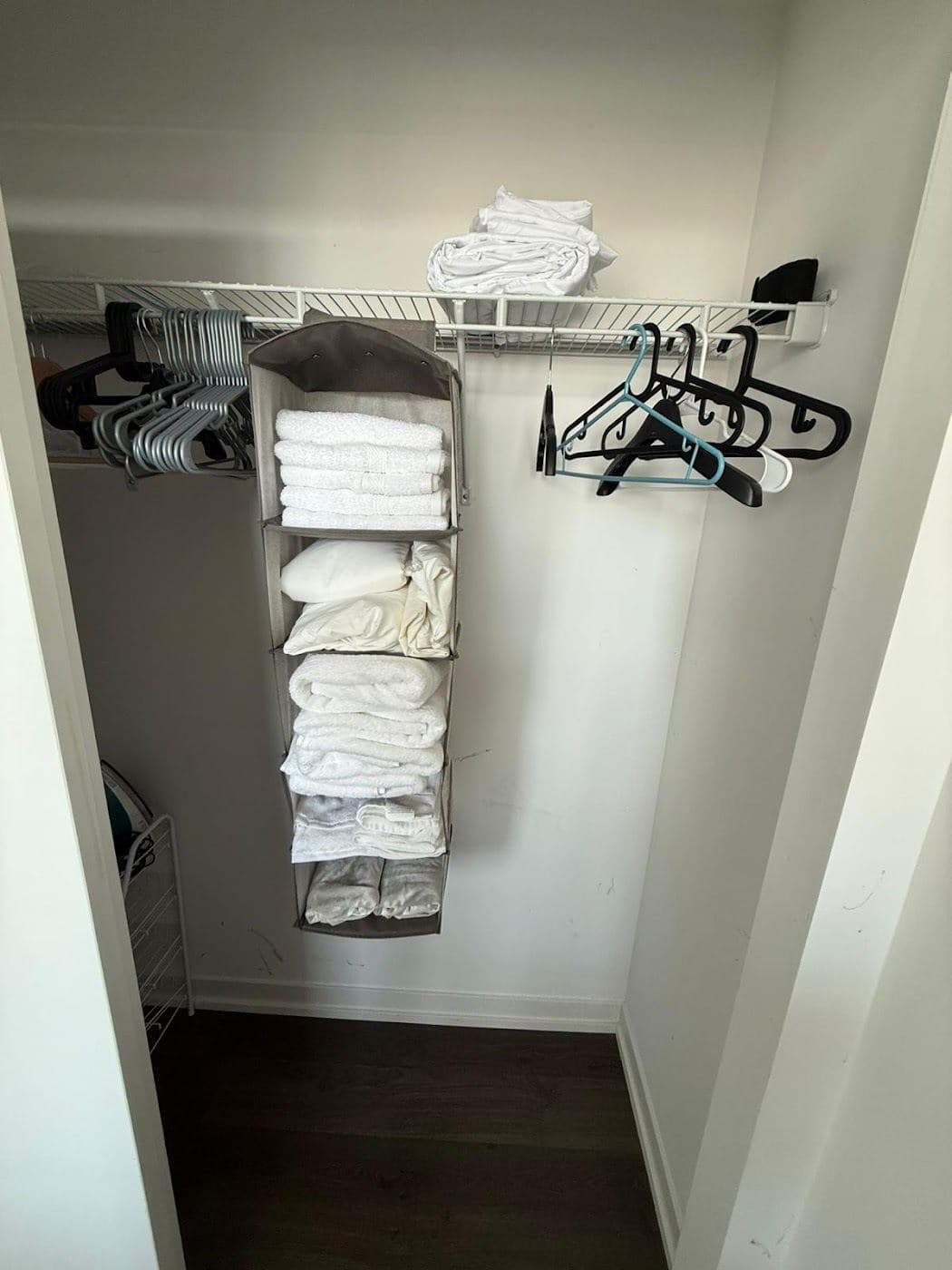
The fastest way to fall behind on a turnover is laundry. Most reliable hosts keep two or three full sets of linens and towels per bed and bath, so a clean set goes on immediately while the used set is washed off-site or between guests, which is the difference between a turnover that waits on a dryer and one that does not. A turnover clean assumes fresh linens are on hand. If they are not ready, even a perfect clean stalls. It stalls at the one task you cannot rush.
Count and inspect before making the beds
Count and inspect linens before making beds. Check sheets, pillowcases, duvet covers, mattress protectors, blankets, bath towels, hand towels, and kitchen textiles for stains, tears, hair, dampness, or strong odour. Do not place a questionable item and hope it looks acceptable after the room is staged. Move it instead. Use the host's designated treatment or replacement area. Take an approved backup. Keep clean textiles away from open chemical containers, used laundry, cleaning cloths, and floors, since a stack of fresh towels sitting next to a bag of used ones is no longer a stack of fresh towels.
Report maintenance and damage separately
Cleaning teams often see the property more frequently than anyone else. That does not make them the right people to diagnose or repair every concern. Use a separate report for leaks, slow drains, loose hardware, damaged furniture, missing items, stained textiles, burnt-out lights, unusual appliance behaviour, pest signs, or safety concerns. Include a clear photo. Add a location and a short description. Then let the host decide the next step.
Urgent hazards versus routine observations
Separate urgent issues from routine observations. Active water, a door that cannot secure, exposed electrical damage, or another immediate hazard needs prompt escalation, and it may affect whether the property is ready at all. A chipped mug is different. So is low backup inventory. Both can enter the normal maintenance queue. Clear categories prevent serious concerns from being buried in a long cleaning message, and they prevent the cleaner from making unauthorized repairs under time pressure.
Use a two-stage quality check
Two passes, not one. The person cleaning should complete a room-level check before moving on. Then a property-level walkthrough, after beds are made and floors are dry. During the final pass, view the space from the entrance as a guest will. Test the approved lights and visible controls, confirm the temperature setting requested by the host, and check that windows and doors are left as instructed, none of which can be done once the door has closed behind you. Verify that no cleaning tools remain. No personal items either.
When to bring in a professional turnover service
Self-cleaning works for the occasional booking. It stops working at scale. Once you are juggling back-to-back stays, same-day checkouts and check-ins, or multiple units, a consistent service pays for itself in protected reviews and reclaimed time, because the constraint stops being effort and starts being the number of hours that exist between one checkout and the next check-in. The value is more than the cleaning. It is the same checklist, run the same way, every turnover, so a five-star standard does not depend on how rushed you happen to be that day.
What to share when you request a scope
When requesting short-term rental turnover cleaning, share the property type, the room and bed count, the checkout and check-in window, access steps, parking, laundry arrangement, linen location, restock list, waste rules, and reporting expectations, since a scope agreed in writing before the first turnover is what keeps the second one from turning into a negotiation. Identify owner-locked areas. Name the tasks that sit outside the cleaning scope. Then ask how schedule changes, guest belongings, damaged items, and maintenance observations are communicated, because both sides need to understand the handoff before the first turnover and not after it.
Review the checklist as the listing changes
Review the checklist whenever the listing changes. Or the furnishings, amenities, or building rules. Add periodic deep-cleaning tasks based on what the property actually accumulates, and keep a house-cleaning reference for material-specific care. Consistency comes from a clear scope, enough turnover time, stocked supplies, and a final inspection, and it never comes from rushing through an ever-growing list that has quietly absorbed every task anyone ever thought of. That system makes it easier to prepare each stay with the same attention. Even when the booking calendar changes.