What a GTA winter actually leaves behind
A spring cleaning checklist is worth writing. Winter here deposits what a weekly routine never catches. Six months of road salt and sand arrive on boots and settle into entry mats, grout, and the first metre of hallway floor, where they stay until somebody lifts the mat and looks underneath it. The furnace runs for months, and it moves fine dust onto the tops of doors, onto the blade edges of ceiling fans, and onto the grilles of every supply and return vent.
Moisture with nowhere to go
Meanwhile the windows stay shut. Cooking vapour, humidifier mist and shower steam have nowhere to go, so they collect as film on interior glass and as grime in window tracks, and neither of those surfaces is on any weekly list ever written. Closets still hold parkas nobody needs for months. None of it shows on a counter. Which is exactly why it needs a separate annual pass.
How to use the list below
The list below is organized by room. Every item is one a weekly clean skips on purpose. Treat it as a menu, not an obligation.
Decide what you are not doing first
This is the step most spring cleans skip. It is also the reason so many of them stall with three rooms finished and the contents of a linen closet stacked on a bed nobody can now sleep in. Walk the home first, full list in hand. Cross tasks off. Explicitly. In writing.
What to cross off before you start
Good candidates for the cut. Anything requiring a ladder you do not own. Anything behind an appliance you are not confident moving. Any storage area you have not opened in a year and have no plan for now, and any room already scheduled for painting or renovation, since cleaning a room a week before it gets stripped is time you will never get back. Cut a task now and it is a decision. Abandon it on day two and it is a mess.
Rank what is left
Then rank what is left into must-do, useful, and optional. Want a structure to hang that ranking on? A cleaning checklist template gives you a blank frame to fill with your own rooms, instead of a floor plan that belongs to somebody else entirely, mudroom included.
Entryways and the outdoor transition
Start here. Everything else in the home came through this door. Lift and wash the boot trays. Check what has pooled underneath them. Salt residue leaves a white haze on tile and hardwood that comes back as the surface dries, so plan on a second pass instead of scrubbing harder the first time. Shake out and wash the entry mats, and inspect the backing for grit that has worked through, because a mat holding grit against a floor is doing the exact opposite of its job.
The coat closet and the baseboard behind it
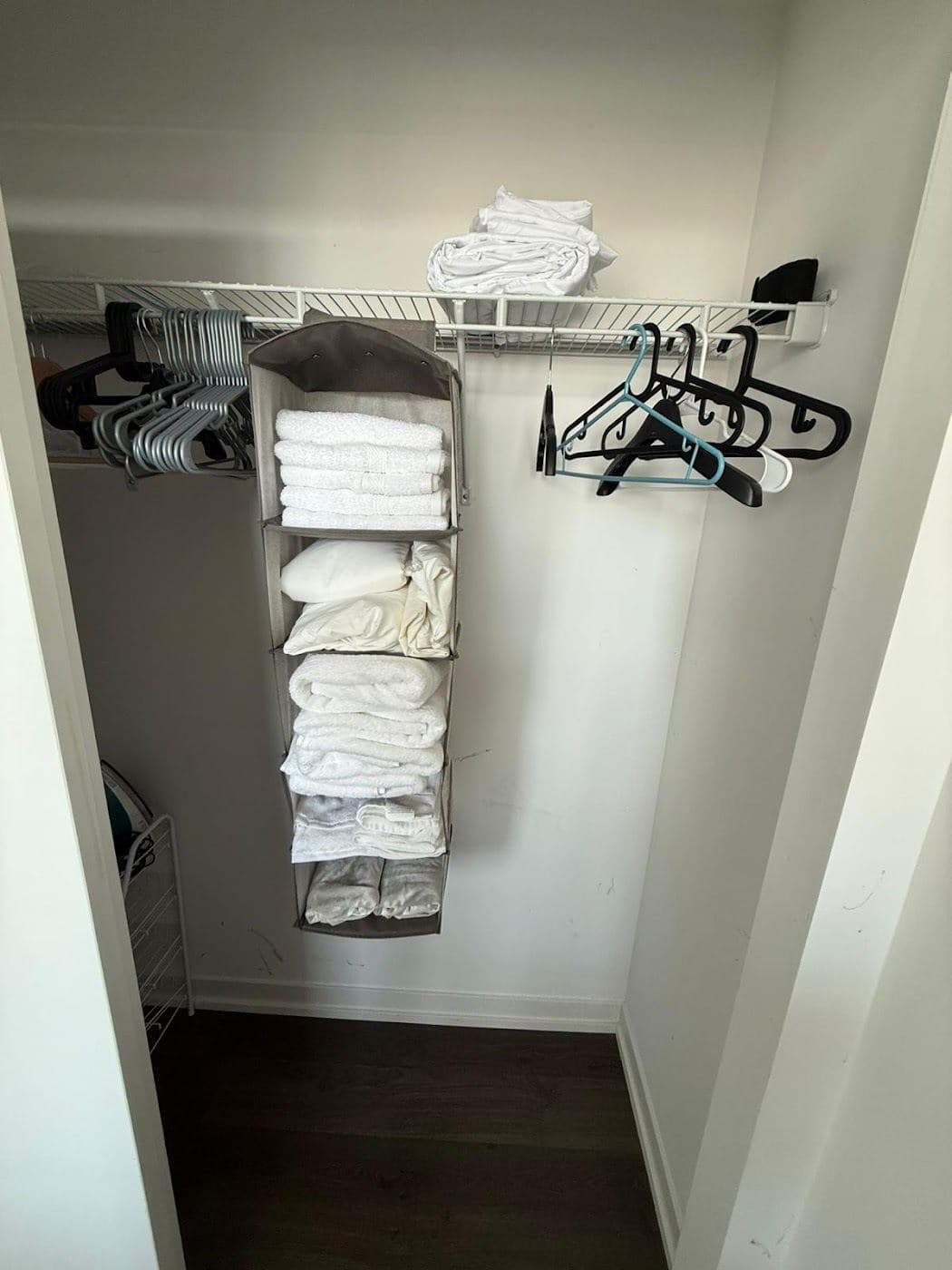
Empty the coat closet completely. Winter outerwear, mismatched mittens and boots that no longer fit are the easiest seasonal cut in the house, and the closet is far easier to wipe once they are out of it. Wipe the closet floor and shelf. Clean the door frame and handle. And check the baseboard behind where the boots sat, because that strip takes the worst of the salt and nobody has looked at it since November. Extend the same pass to the porch, to the garage entry, and to the landing outside a condo or apartment door, where sand collects against the threshold.
The kitchen: behind, under, and inside
The kitchen carries most of the annual list. Pull the range forward if the floor and the connections allow it, then clean the side panels and the floor underneath, and do the same with the fridge, vacuuming the coils or grille at the back or base if the manual says they are accessible. Clean under the dishwasher toe kick. And check for the slow drip. It shows as a dark line on the flooring.
Inside the cabinets and the appliances
Empty upper and lower cabinets one at a time. Not all at once. Wipe the interiors, check expiry dates in the pantry, and clean the cabinet tops if there is a gap above them, which is where cooking grease and dust combine into the stickiest film in the home. Wash the range hood filter according to its instructions. Wipe the hood underside. Finish with the interiors: toaster, kettle, microwave. And the crumb tray nobody has removed since last spring.
Bathrooms and the places moisture collects
A winter of hot showers with the window shut concentrates moisture in the same few places. Unscrew or unclip the exhaust fan cover, wash it, and vacuum the visible dust from the grille opening, which is usually where a winter of shower steam has left a grey felt along the slots. Stop there. Anything past the grille is inside the ductwork, and that belongs to a specialist trade, not a cleaning session.
Empty the vanity, then check for leaks
Empty the vanity and the medicine cabinet, wipe the shelves, and clear out expired products, since a shelf you have to unpack twice is a shelf you will skip next year. Check under the sink for a slow leak. Swollen particleboard. A ring on the cabinet floor. A musty smell. Then work the detail that routine cleaning skips: grout lines, the track of a sliding shower door, the base of the taps, and the caulk seam where the tub meets the wall.
Bedrooms, mattresses, and the closet rotation
Strip the beds down to the bare mattress. Launder the mattress protector, pillow protectors, and any duvet or blanket that has been on the bed all winter, following the care label and not a general- purpose setting. Vacuum the mattress surface and the sides. Rotate it if the manufacturer says to. Clean the frame and headboard before anything returns.
Under-bed storage and the seasonal rotation
Under-bed storage is next. Pull it out. A vacuum pass around it is not the same job. Then do the seasonal clothing rotation: heavy coats, sweaters, boots, all of it moves to storage, and the closet floor and shelf get wiped while they are empty. And if the closet is the reason the rotation never happens, that is a sorting problem and not a cleaning one, so a separate professional organizing session is the more honest fix.
Living areas: baseboards, fixtures, and vent covers
These are the whole-home details no weekly routine reaches. Wipe baseboards and the tops of door frames and casings. Take down or open the reachable light fixtures, wash the glass or shades, and replace burnt bulbs while everything is already apart, since nobody wants to go back up there a fortnight later for one bulb. Wipe ceiling fan blades on the top edge. A heating season of dust sits there.
Vent covers and the furniture that never moves
Vacuum and wipe the exterior covers of floor vents, wall vents and ceiling vents, then do the same for baseboard heater fins and radiator surfaces once they are cool, which may mean waiting until the heat has been off for a day. Then get behind and under the furniture that never moves. The sofa. The media unit. The bookcase. Finish with switch plates, door handles, remote controls, and the stair railing, which are touched constantly and cleaned almost never, and which are the first things a visitor puts a hand on.
Window tracks, sills, and interior glass
Window tracks are the most rewarding item on an annual list. Vacuum the loose debris out of the track first. Then loosen what remains. Wipe it out with a cloth on a thin tool. In older GTA homes the tracks also collect condensation residue from months of closed windows, so expect the first pass to be the slow one, and expect to go back over the corners with something thinner than a cloth.
Interior glass, and where the job stops
Wipe the sills and the frame surrounds, check for mould at the corners where condensation pools, and then clean the interior side of the glass, because a room with clean tracks and a smeared pane still reads as unfinished. Exterior glass, second-storey windows, and anything needing a ladder outdoors are a different job with different safety requirements, and none of it belongs on a list you are working through on a Saturday afternoon. Leave them off this list.
Laundry, storage, and the utility corners
Pull the washer and dryer forward if the connections allow, clean behind them, and clear the lint that accumulates around the dryer vent opening, which is the one item on this list with a genuine safety argument behind it. Wipe the washer door seal. Wipe the detergent drawer. And check the shelf above. Products leak and harden over a winter.
One pass at the storage you use
Then one pass at the storage you actually use. The linen closet. The utility shelf. The space under the stairs. Empty it, wipe it, put back only what is staying. Storage areas are the easiest place for a spring clean to expand past its scope, so hold to whatever you decided in the cutting step instead of opening every bin because it happens to be there.
Work in an order that stops the reset stalling
Open one room at a time. Close it before you start another. A half- emptied cabinet in three rooms at once is how a weekend disappears with nothing to show for it, and with three rooms that look worse on Sunday night than they did on Friday. Within each room, work dry and high before wet and low, and leave the floors until the furniture has stopped moving, since grit travels between rooms for as long as anything is being shifted.
Three destinations to keep moving
Keep three destinations moving alongside you: rubbish and recycling, laundry, and a relocation bin for things that belong elsewhere. Do not walk items to their homes as you find them. Plan one disposal or donation run at the end of each day, because bags that sit in a hallway for a week undo the feeling of a finished reset, whatever the rooms behind them look like. Carry the list with you. A printable cleaning checklist is easier to mark up on a ladder than a phone screen is.
When the list is bigger than the time you have
Some of this list should be reconsidered, not pushed through. Heavy appliances on finished floors, ceiling-height fixtures, mould beyond a small surface patch, and unfamiliar chemicals all carry real risk, and the risk does not drop because the task is already written on a page. So does a fixed deadline that leaves no room for a task running long, such as guests arriving or a lease ending, where the day cannot move and the task can. A seasonal reset and a compressed clean differ. If the constraint is hours and not the calendar, then the fast deep clean guide is a better starting point than this page. A spring cleaning service takes the heavy half of this list.
Where the cleaning half gets scoped
SpotlessCo provides house cleaning, deep cleaning, recurring cleaning, and professional organizing in Vaughan and Toronto, and across the wider GTA. If the detail work is what you would sooner hand off, a deep cleaning visit is where the cleaning half of this list is usually scoped, once the rooms and the specific tasks have been named. Appliance interiors, moving heavy items, and anything needing height access are confirmed case by case, never assumed. The sorting half of the list is organizing work. It is quoted on its own. Send the room list, then the specific tasks, then the deadline, with your quote request, so the scope is agreed before anyone starts.
Keep the reset from unwinding by August
Write down which tasks took the longest, and what created the buildup, while the memory of it is still fresh, because that note is what makes next spring shorter than this one. The worst items here build slowly. Cabinet-top grease. Window track grit. One or two habits in the year prevent both.
What belongs in a routine instead
Anything that returns within a month belongs in a routine. Not in an annual reset. That is what a weekly cleaning checklist is for. And if the baseline is hard to hold on your own, compare what you have just finished against a recurring cleaning plan, then set the frequency by what actually comes back between visits.
A spring clean succeeds on scope, not stamina. Decide what you are not doing. Work one room at a time, from high to low. And give the annual details, including the ones behind, under, and inside, the time a weekly routine never has.